

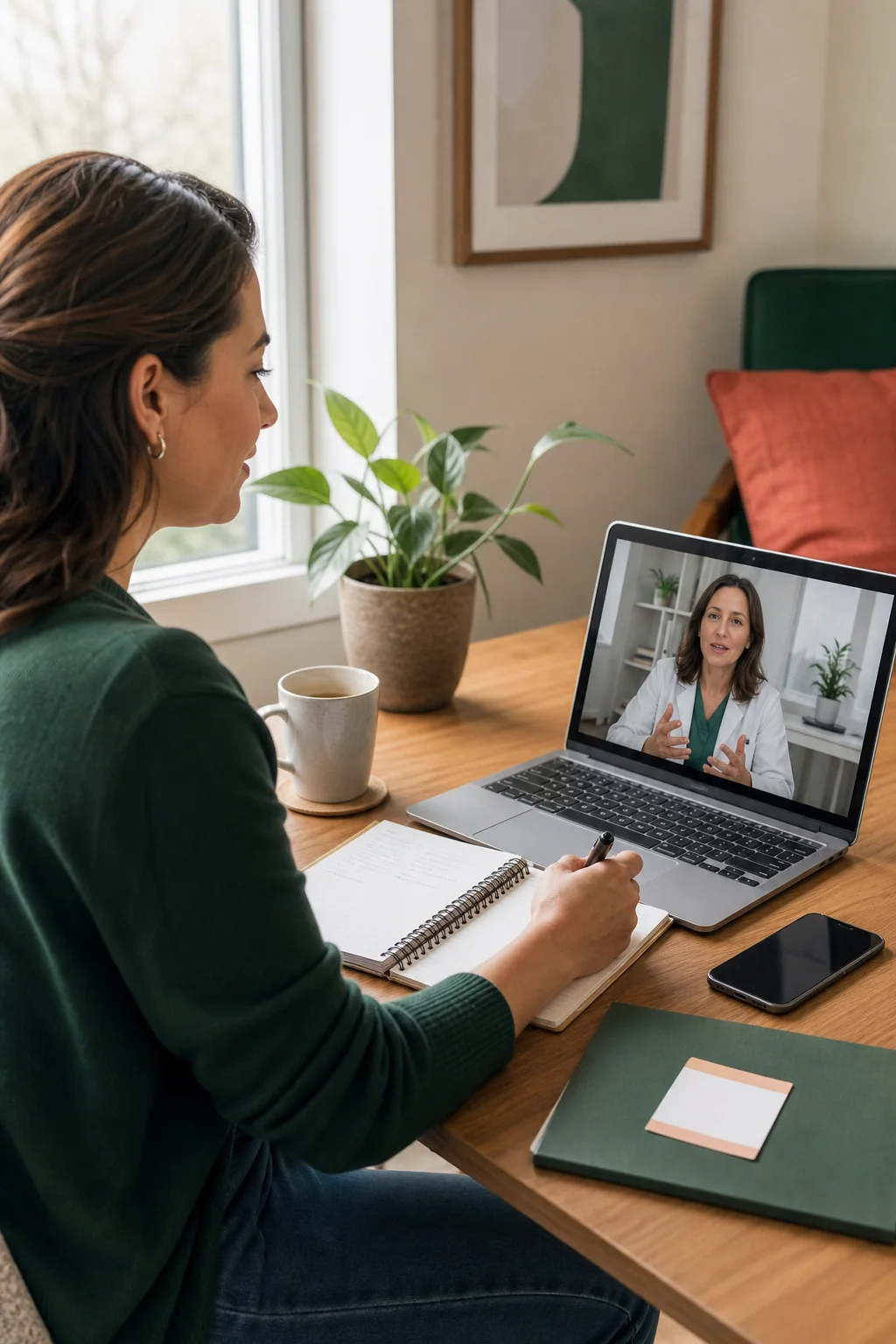
Local, online, and hybrid care compared
Visit format matters less than whether the program can complete the assessment and stay clinically reachable.
Swipe horizontally to compare →
| Care need | Local clinic | Online or hybrid provider |
|---|---|---|
| Physical exam or teaching | Often available in the same practice | May require a coordinated local visit |
| Labs and measurements | May be collected or coordinated nearby | Often completed through an outside lab or local partner |
| Between-visit access | Depends on office workflow and hours | May offer convenient messaging, but response ownership matters |
| Licensure and location | Verify the local clinician and facility | Verify the clinician can treat you where you are located |
Table source:HHS direct-to-consumer telehealth guidance
01
Use the same clinical test for every care model
A polished office does not prove good follow-up, and a convenient app does not prove weak care. Start with the named clinician or medical group, the assessment, the exact medication pathway, and the plan for questions and side effects.
HHS notes that cross-state telehealth practice depends on state rules↗. An online program should know where you are located for the visit and use a clinician who is authorized to provide care there. Both local and online programs should explain who owns the care relationship.
02
When a local clinic may fit better
In-person care can make physical assessment, measurement, lab coordination, injection teaching, and connections to other clinicians easier. It may also suit people who prefer a face-to-face relationship or have a history that requires closer examination.
Local does not always mean everything happens under one roof. Ask whether labs, medication, nutrition support, and urgent questions are handled by the same practice or separate organizations.
- You prefer face-to-face visits or need an in-person examination.
- You want one practice to coordinate measurements, labs, and follow-up.
- You have a complex history that may benefit from closer local coordination.
- You value a nearby contact when technology or shipping fails.
03
When online care may fit better
Telehealth can reduce travel and make scheduled follow-up easier for people with limited local options. HHS also emphasizes that patients need to understand what can be handled virtually, when in-person care is appropriate, and how technology, privacy, and follow-up work↗.
Ask whether visits are live, messaging-based, or asynchronous; how quickly a clinician responds; where labs are completed; and what happens if you need an examination. Then verify the pharmacy through the relevant state board↗.
- Travel, scheduling, or geography makes local visits difficult.
- The program offers clinician access that fits your schedule.
- You have a private place and reliable device for visits.
- You understand how local labs, exams, and urgent needs are coordinated.
04
Ten minutes of questions can expose the real program
Use identical questions with every clinic and website. Consistent answers make format, care, and price differences visible. The full cost-and-insurance guide can help you itemize each answer.
- Who evaluates me, and can I verify that clinician’s credential?
- Is the clinician authorized to treat me where I will be located?
- Is the visit live, asynchronous, in person, or a mix?
- Which product and pharmacy pathway do you use?
- Where are labs or physical examinations completed?
- How do I reach the clinical team between visits?
- What does the complete ongoing price include and exclude?
- What happens if I need urgent, in-person, or specialist care?
Common questions
Answers to clarify the comparison
Is an online GLP-1 provider legitimate?
Is a local clinic automatically safer than telehealth?
Can an online program arrange laboratory testing?
Primary sources
Read the official material behind this page
- HHS: licensing across state lines
- HHS: preparing patients for direct-to-consumer telehealth
- FDA: locate a state-licensed online pharmacy
Health information is educational and does not diagnose, determine eligibility, or replace product labeling and care from a qualified professional.